
Checking Montgomery County Criminal History
There is no single complete Montgomery County criminal history portal. The best first source depends on the event. Call the sheriff or jail for a recent arrest, use the Clerk of Superior Court for a filed felony case, and use the Georgia Bureau of Investigation for a state history. The Georgia Felon Search is useful, but it is only a name-based view of reported felony convictions.
Prepare the full name, aliases, date of birth, event date, arresting agency, and any case or incident number. Similar names can produce false candidates, while a missing date or agency can send a request to the wrong counter.
- Identify whether the question concerns an arrest, court case, conviction, warrant, or custody status.
- Start with the Montgomery County office that created that record and give the narrowest date and identity details available.
- Compare a recent sheriff or jail record with Magistrate Court and Superior Court as the case moves forward.
- Use Georgia Felon Search only for its reported felony-conviction scope, not as proof that no other record exists.
- For your own complete identity check or correction, use a fingerprint-supported GCIC inspection and obtain certified court documents when needed.
Montgomery County's Railroad Avenue Record Counters
Montgomery County concentrates much of its court record work at 400 South Railroad Avenue in Mount Vernon. The Clerk of Superior Court and Magistrate Court share the court complex, but they do not hold the same file. The clerk maintains felony case filings and judgments. Magistrate Court creates warrant, first-appearance, bond, and preliminary-hearing records before many felony matters reach Superior Court.
Clerk of Superior Court
400 South Railroad Avenue, Mount Vernon, GA 30445
912-583-4401
Monday through Friday, 8:30 a.m. to 5:00 p.m.; open through lunch.
Magistrate Court
400 South Railroad Avenue, Mount Vernon, GA 30445
912-583-2170
Public office hours are weekdays; warrant execution is available around the clock.
The county's Superior Court clerk page is the source for current counter details. Calling first is wise because no local criminal-copy fee schedule or dedicated request form was published.
Georgia Official Background Checks
GCIC, a division of the Georgia Bureau of Investigation, is the central repository for fingerprint-supported arrest cycles and reported final dispositions. A person reviewing their own record can request inspection and challenge inaccurate or incomplete information. Fingerprints are the only positive identity method, which is crucial when names and birth details overlap.
The public Georgia Felon Search is narrower. It can return reported Georgia felony convictions, pleas, and sentences without subject consent under O.C.G.A. § 35-3-35(c). It omits misdemeanors, juvenile history, restricted information, and arrests without a reported felony conviction. GAPS, operated through IdentoGO/IDEMIA, is Georgia's appointment-based fingerprint capture channel.
The GCIC criminal-history FAQ distinguishes public checks from personal inspection and correction.
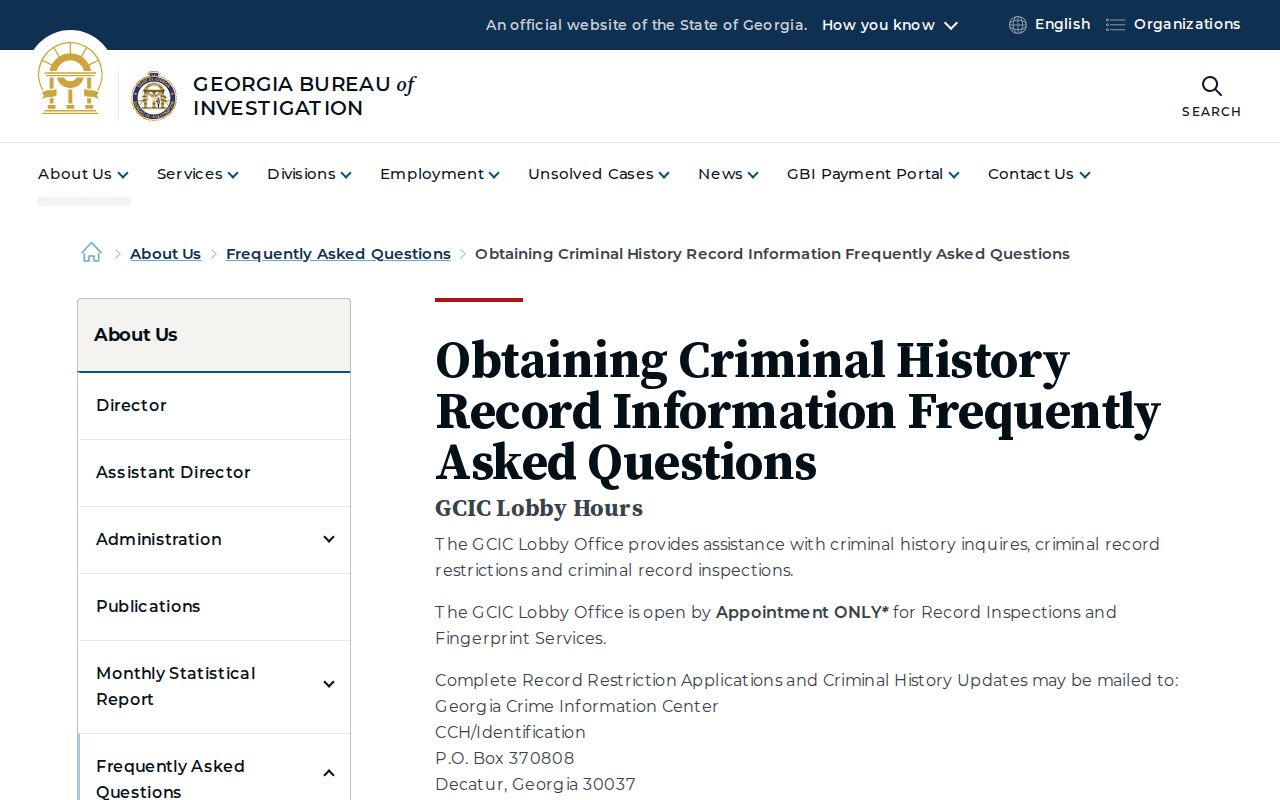
That official guidance is the best starting point when a Montgomery County state record may be incomplete or tied to the wrong identity.
Reading Montgomery County Felon Search Results
Georgia Felon Search may display as many as five close candidates rather than one proven identity. A search costs $15 even when it finds no record, and opening each possible match creates another $15 charge. Add identifiers before paying to reduce broad results, then compare any candidate with the Montgomery County court judgment.
| Search field | How it helps | Caution |
|---|---|---|
| Last, first, and middle name | Builds the main name query | Aliases and spelling changes can affect results |
| Date of birth | Separates similar names | Submitted data may be compared with aliases |
| Race and sex | Narrows a broad candidate list | They do not prove identity |
| SSN or MNU type | Adds an identifier where appropriate | SSN is suppressed from the result |
According to the official search FAQ, “no record” can reflect a dismissal, downgrade, First Offender treatment, restriction, or reporting delay. It is not a clean bill for every court and agency file.
The same Georgia Felon Search FAQ documents the fee and the limits shown in the search interface.
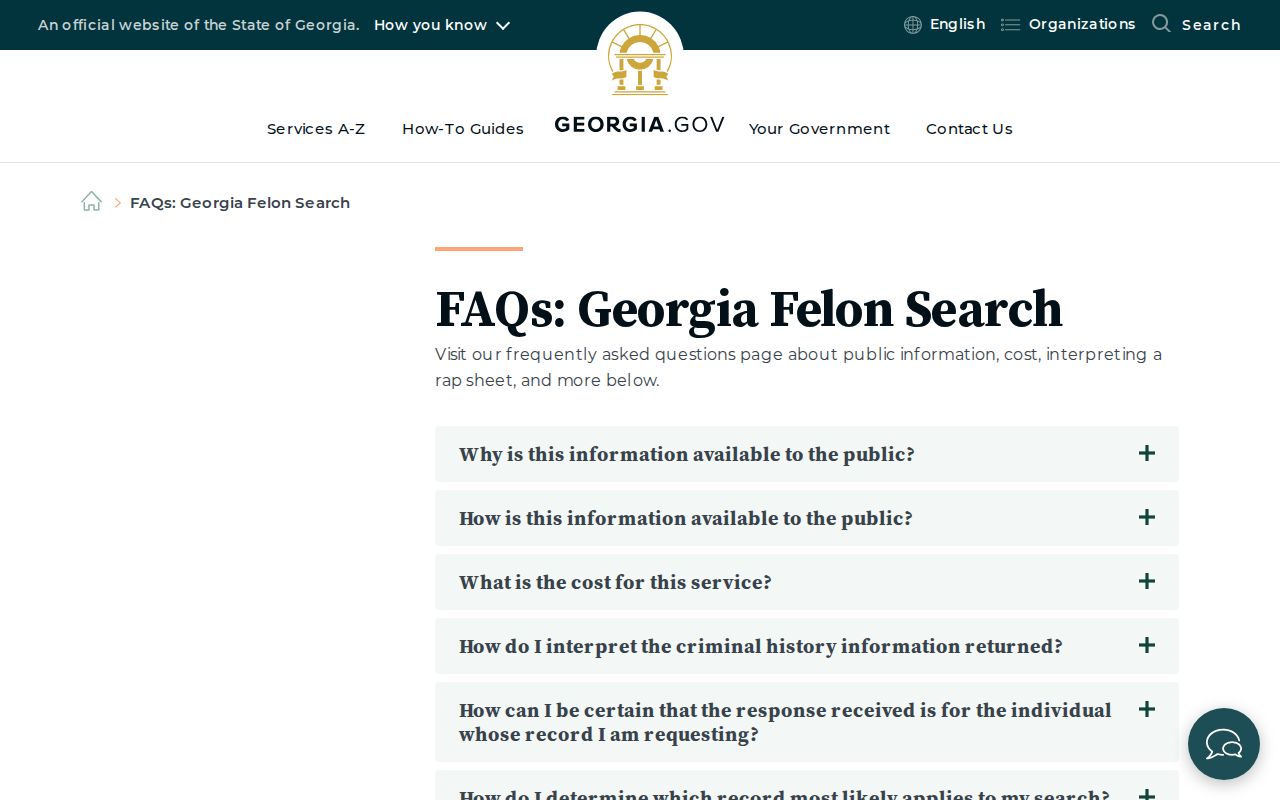
The screen reinforces why a paid name result must be checked against the Montgomery County judgment and should not stand alone.
Criminal Record Types
Montgomery County criminal records are event-based. Each office adds a different layer, so one document should not be mistaken for the whole history. The arresting agency describes the incident, the jail describes custody, the prosecutor chooses filed charges, and the court records the result.
- Arrest and booking: the sheriff, city police, and jail document the initial event and custody.
- Court case: Magistrate and Superior Court files show warrants, hearings, formal charges, pleas, orders, and judgment.
- State history: GCIC connects fingerprinted arrest cycles with dispositions submitted by agencies and courts.
- Custody and supervision: the jail, GDC, DCS, and parole board each answer a distinct status question.
- Registry: GBI and the sheriff maintain public sex-offender registration information for lawful safety use.
Montgomery County's Offline Record Fallbacks
No verified public Montgomery County inmate roster, warrant search, booking log, or sheriff records-request form was found. That gap changes the search order. For current custody, call the Montgomery County Jail at 912-583-2521. For sheriff incident or arrest records, call 912-583-2321 or contact the sheriff at 208 East Broad Street in Mount Vernon. For a possible warrant, add Magistrate Court at 912-583-2170.
| Question | First channel | Verification channel |
|---|---|---|
| Is someone in local custody? | County jail phone | Court for bond or filed status |
| Who wrote the report? | Sheriff or named police agency | Incident or booking sheet |
| Is a warrant active? | Magistrate Court and sheriff | Clerk docket for a filed case |
| Where is an older record? | Targeted Open Records Act request | Originating agency or court |
Inside a Montgomery County Criminal Record
The fields change with the source. An arrest cycle may contain identity and fingerprint data, while a court file focuses on charges and rulings. Read dates and labels closely, because an arrest charge may later be changed, declined, or replaced by the prosecutor.
| Name & Identifiers | Legal name, aliases, birth information, and agency or state identification numbers where public. |
|---|---|
| Arrest / Booking Data | Arrest date, agency, booking time, incident or warrant number, alleged charges, bond, and release status. |
| Charges & Statutes | Original and amended descriptions, code sections, and felony or misdemeanor designation. |
| Disposition | Dismissal, acquittal, plea, verdict, conviction, or another final court outcome. |
| Sentence | Custody, probation, fines, restitution, and relevant sentence dates when public. |
| Custody / Supervision | Local jail status, GDC status, or DCS supervision details, each verified with the responsible office. |
Montgomery County's 41-Booking Snapshot
The sheriff's official first-quarter 2025 immigration report records 41 bookings. That is a dated administrative count, not 41 convictions, 41 unique crimes, or a county crime rate. A person may be booked on more than one allegation, a charge may change, and the court may later dismiss or resolve the case in another way.
The report is still useful because it confirms that Montgomery County booking data exists even without a public roster. The quarterly jail report also shows why a narrow written request should specify the period, booking fields, and public portions sought.
Public Access Laws in Georgia
The Georgia Open Records Act generally requires agencies to respond within three business days, but a response is not always the finished production. An office can state when records will be available, estimate lawful costs, or identify exemptions. Court access, criminal-history dissemination, registry publication, and restriction also follow their own statutes.
Key Statutes:
O.C.G.A. §§ 50-18-70 through 50-18-77 - governs Georgia open-record requests, timing, fees, and exemptions.
O.C.G.A. § 35-3-35 - controls dissemination of Georgia criminal-history information, including the public felony search.
O.C.G.A. § 35-3-37 - governs eligible record restriction, correction, and some court sealing.
O.C.G.A. § 42-1-12 - sets registry duties and public-information rules.
Montgomery County Warrant Checks Without a Portal
Magistrate Court is the verified local warrant hub and handles warrants for the sheriff, Mount Vernon Police Department, GBI, State Patrol, DNR, and DDS. Someone checking their own possible warrant should call Magistrate Court at 912-583-2170 and the sheriff at 912-583-2321. Ask about counsel and a safe surrender process instead of arriving without guidance.
A bench warrant tied to a filed Superior Court case may also appear in the clerk's docket. An old entry or private list does not establish that a warrant remains active. Unserved warrants and investigative facts may also be withheld under public-access rules.
Sealed, Expunged, and Restricted Records
Georgia uses the term “record restriction.” Under O.C.G.A. § 35-3-37, eligible information may be limited in GCIC dissemination, but restriction does not literally erase every agency and court record. Some court material can also be sealed, and juvenile files, First Offender treatment, and special vacatur rules follow distinct paths.
The official process may require the arresting agency, prosecutor, and GCIC. The Georgia restriction overview explains the route, while the GCIC form asks for the arrest cycle, agency, offenses, identifiers, and disposition. GCIC lists a $25 restriction processing fee effective January 1, 2025; a local agency fee was not found.
Georgia's record-restriction guide lays out the agency and prosecutor steps for an eligible arrest cycle.
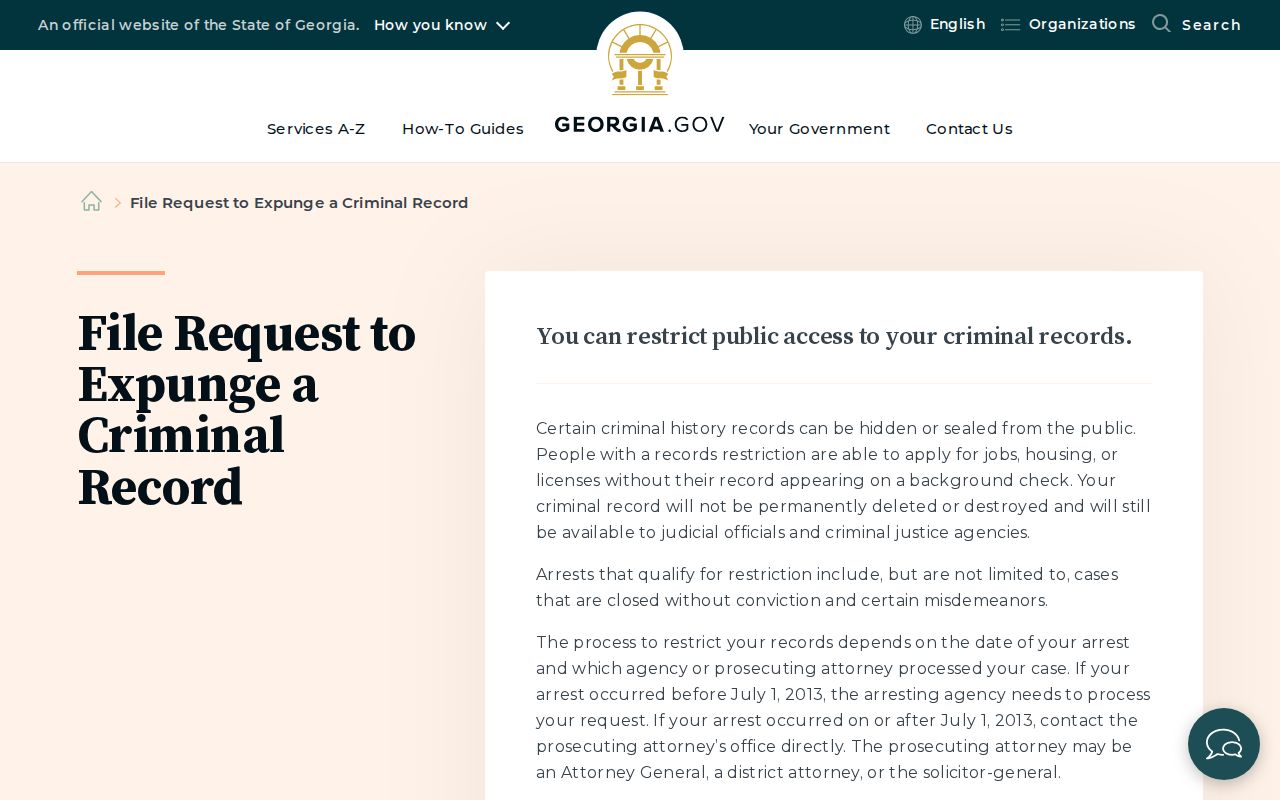
The process shown there makes the exact arrest date, agency, offense, and disposition far more useful than a broad name query.
Montgomery County Probation and Parole Records
The sentencing order is the starting point for supervision terms. Georgia Department of Community Supervision handles adult felony probation and parole supervision, while the State Board of Pardons and Paroles makes parole decisions. Montgomery Magistrate Court states that Judicial Alternatives of Georgia provides private probation for its cases, so not every probation question belongs with the same agency.
- Court order
- Controls the sentence and stated conditions.
- DCS status
- Addresses current adult felony community supervision.
- Parole decision
- Comes from the State Board, not the county clerk.
- GDC profile
- May show custody or supervision details but is not a full criminal history.
The Georgia Department of Community Supervision identifies the agency responsible for adult felony community supervision.
Montgomery County residents should still begin with the sentence because misdemeanor probation may follow a different local structure.
The Georgia State Board of Pardons and Paroles is the official source for parole decisions and clemency information.
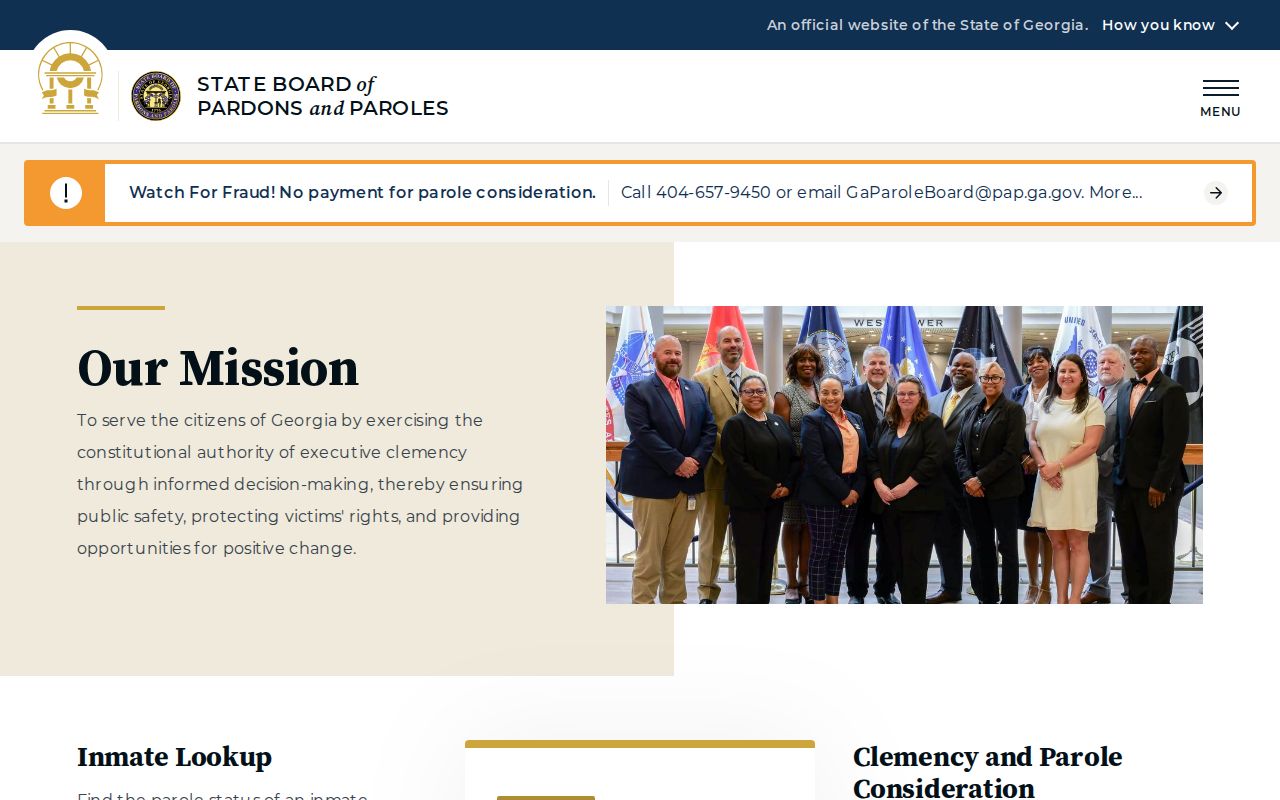
This separates the Board's decision role from DCS supervision and from the Montgomery County clerk's court-file role.
Montgomery County Criminal Records by City
City records begin with the agency that handled the event, then move into Montgomery County courts and state reporting as appropriate. The 2020 Census, April 1, 2020, ranks Mount Vernon, Ailey, and Uvalda as the county's three largest incorporated cities. Their access channels differ sharply.
Mount Vernon Criminal Records
Population 1,900 · City police reports, citation payment, and nearby county court counters.
Ailey Criminal Records
Population 519 · Sheriff, jail, and Mount Vernon court fallbacks serve the search path.
Uvalda Criminal Records
Population 439 · Municipal Court is verified, but no public city case portal was located.
From 1793 Montgomery County Files to GCIC
Montgomery County was created in 1793, and its tax records reach back to 1795. Modern criminal history is far less centralized than that long archive might suggest. Today, a local arresting agency starts the record, the jail adds booking data, the prosecutor decides the filed charge, the court enters the outcome, and agencies report qualifying events to GCIC.
Delays or missing dispositions can leave a state cycle incomplete. For that reason, someone reviewing their own Montgomery County criminal history should compare the agency report, court judgment, and fingerprint-supported GCIC inspection. Each source can correct a different part of the chain, and dated copies make careful later follow-up much easier.